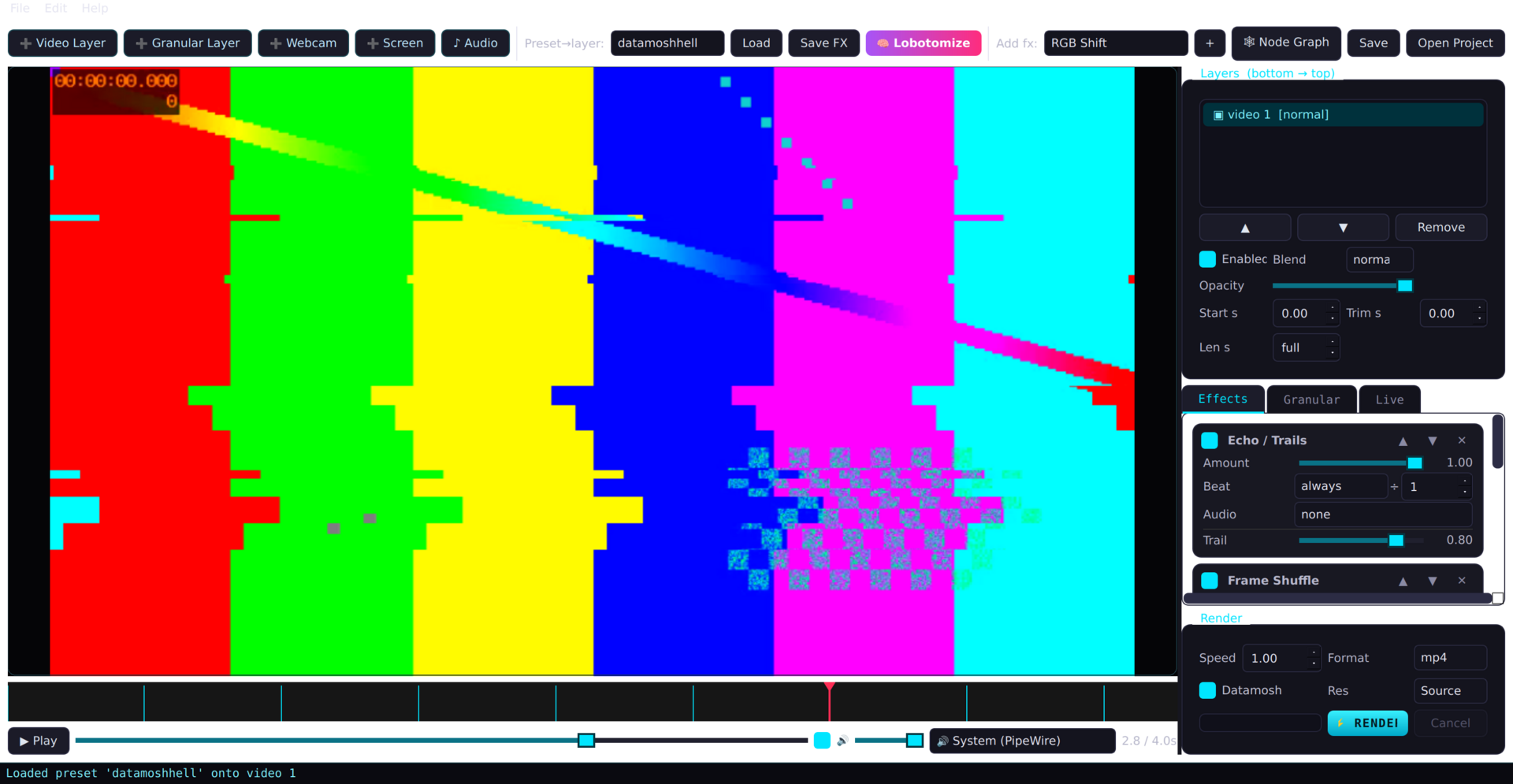
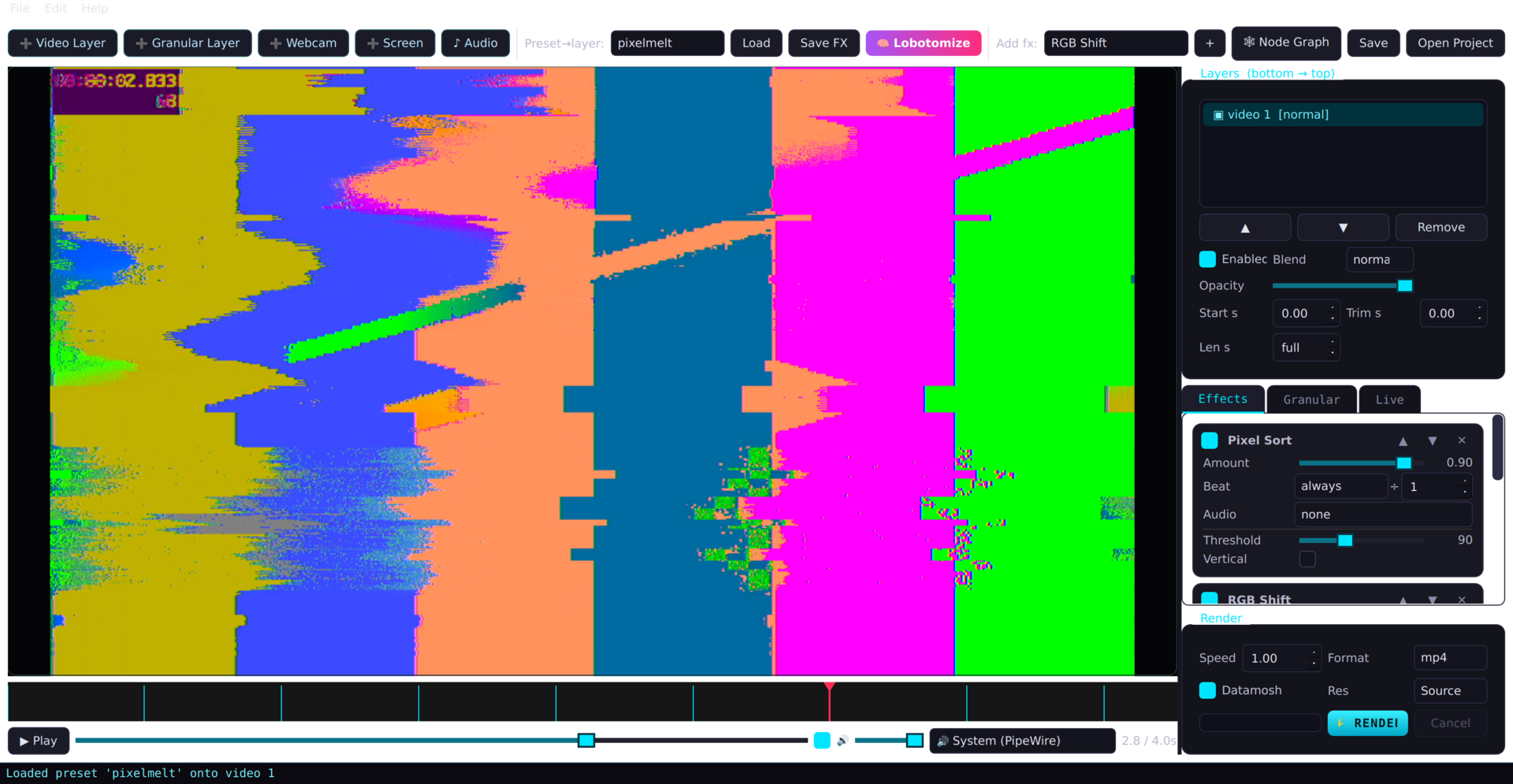
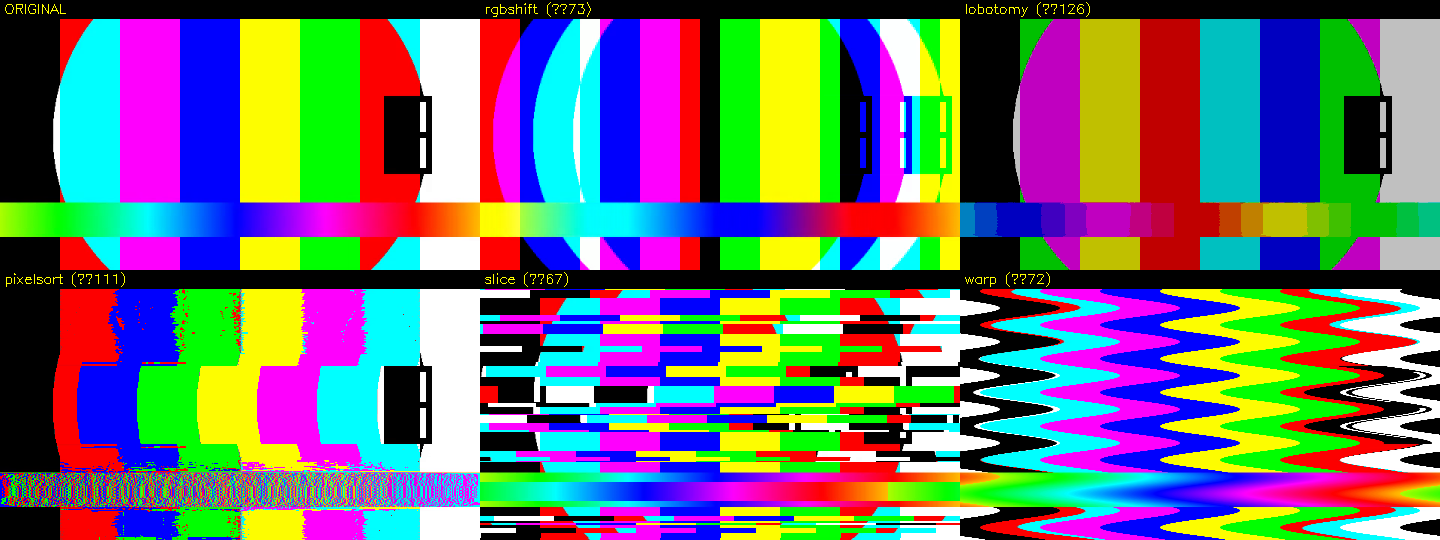
Every effect can fire on detected beats and react to the audio,
so a render is chopped, reordered and corrupted in time with the track —
not by hand.
Beat sync
librosa detects beats and onsets. Each effect runs always, as a
decaying pulse, or hard-gated for a hold time — optionally only every
Nth beat.
Audio-reactive
Map any effect to an audio band — rms, bass, mid, high. Bass drives
zoom punches, highs drive the RGB tear, loudness drives grain density.
Real datamosh
Frames are encoded to an mpeg4 AVI, then I-frames are stripped at the
byte level so motion vectors bloom over the wrong content. Not a shader
fake.
Frame-granular synthesis
Shatter a clip into a cloud of windowed frame grains. The same grain
schedule synthesizes matching granular audio, so picture and sound
granulate in lockstep.
Layers & time-warp
Composite any number of layers with 16 blend modes. A beat-driven
time-warp freezes, ramps and reverses a layer's content against a
steady music bed.
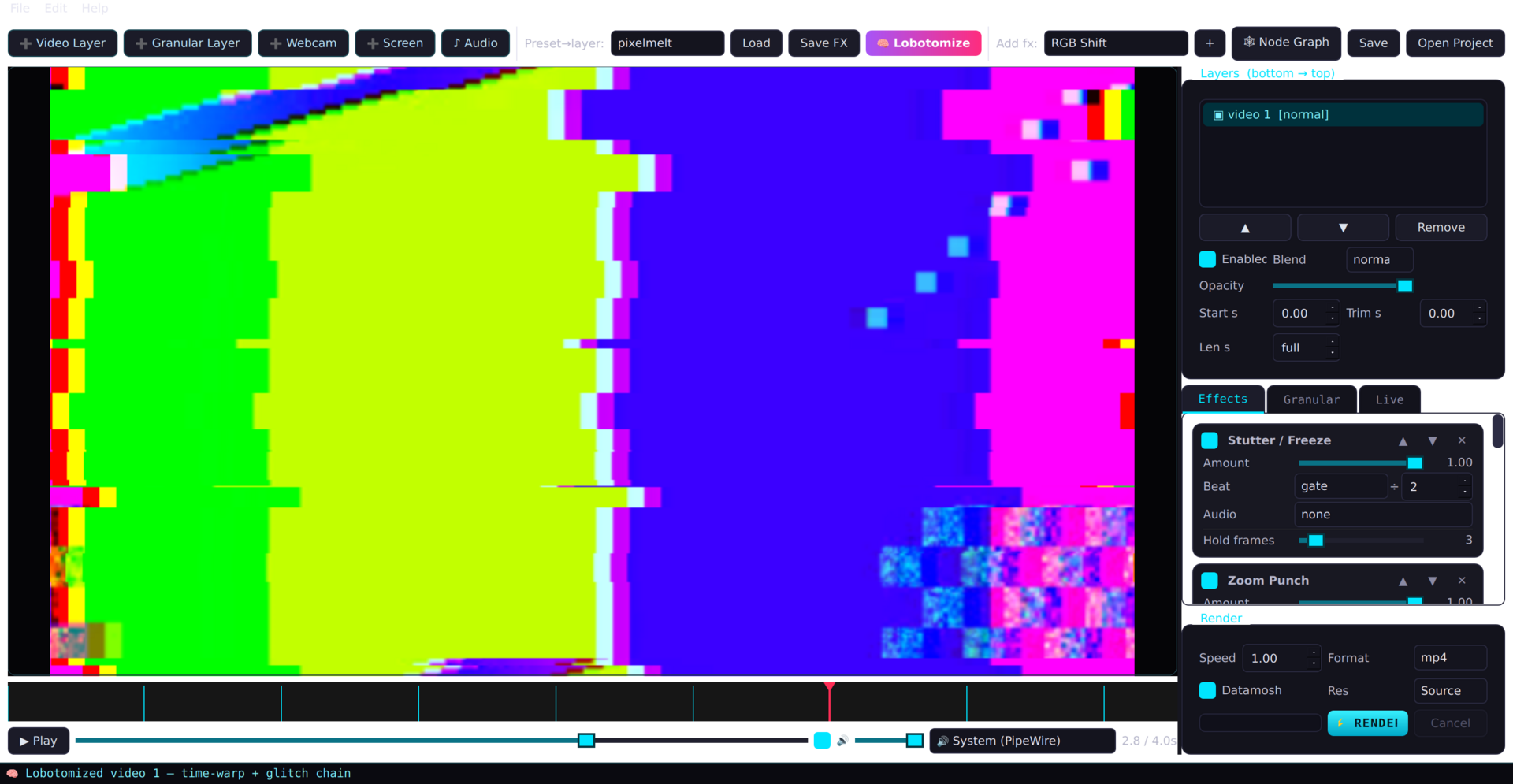
Auto-Lobotomizer
One button generates the whole edit: a beat-driven time-remap plus an
audio-reactive glitch chain, datamosh on.
GPU & node graph
moderngl fragment shaders, plus a node-graph mode with feedback loops
for video-feedback trails.
Live performance
Drive params with a gamepad or MIDI, add a webcam or screen layer, and
stream the glitch composite to a virtual webcam.