SAMPLOOLER
A small looper you play by tilting it.
Hold the button and make a sound. Let go and it loops. Tip the box forward and the loop runs faster; tip it back and it runs backwards. Open source, about $15 in parts, flashes from this page.
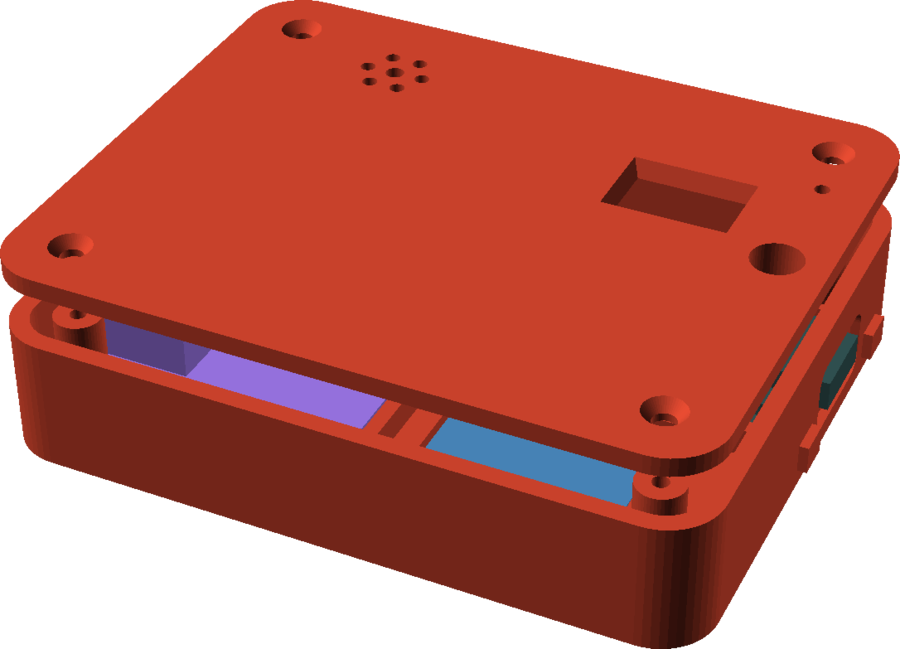
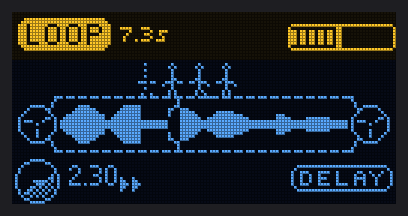
See and hear it
Rendered, not filmed: no Samplooler has been built yet. The sound is the firmware's own playback engine running on a computer, given the same moves the 3D model makes, and the screen is the firmware's own drawing code.
How it works
Try it here
The same playback engine as the firmware, running in your browser. Hold the button to record from your microphone, or load the demo loop. On a phone, turn on tilt and tip the phone. On a computer, drag the slider.
Headphones stop the loop from feeding back into the mic.
Two versions
Both use the same microphone, audio output and tilt sensor. The S3 version is the full one. The C3 version is smaller and cheaper, with a shorter take.
| Samplooler (ESP32-S3) | Samplooler mini (ESP32-C3) | |
|---|---|---|
| Board | ESP32-S3 SuperMini | ESP32-C3 SuperMini with 0.42" screen |
| Take | 20 s at 32 kHz | about 5 to 7 s at 16 kHz |
| Screen | 0.96" 128x64 two-colour | 0.42" 72x40, on the board |
| Controls | record button, encoder | button, optional encoder |
| Modes | TAPE (speed and pitch together) and GRAIN (pitch kept, freeze, scrub) | TAPE |
| Effects | delay and stutter on the roll axis | none |
| USB | MIDI port, USB sound card, plugin | power and flashing only |
| Sample slots | 8, kept when off | 8, kept when off |
| Parts, roughly | $15 to $25 | $10 to $17 |
The S3 version runs on a built ESP32-S3 SuperMini kit without rewiring.
Screens
The loop is a tape running between two reels, and a small stick-figure operator lives on it. It runs with the tape, forwards or backwards, as fast as you tip the box. Turn the delay on and its echoes trail behind; stutter the loop and the operator stutters too; in GRAIN mode it juggles; tip all the way and it's flung off its feet. Leave it alone and it falls asleep.
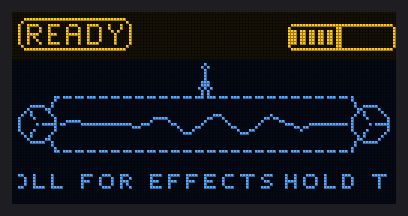
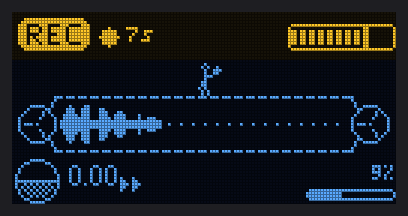
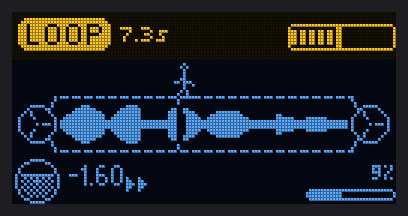
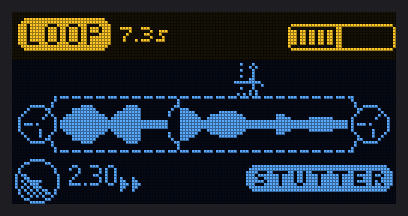
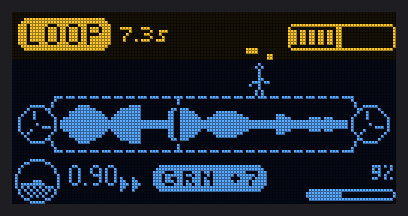
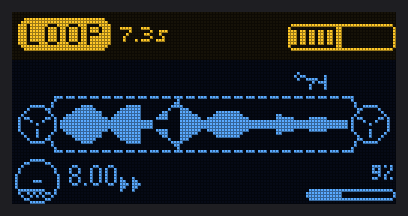
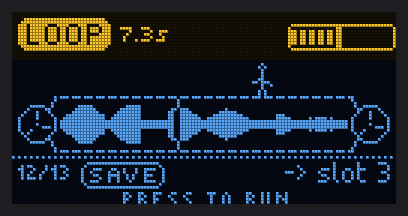
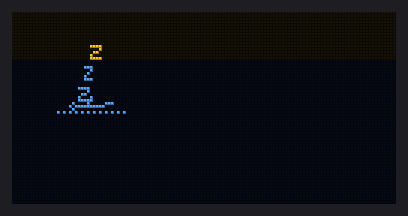
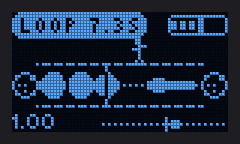
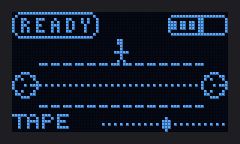
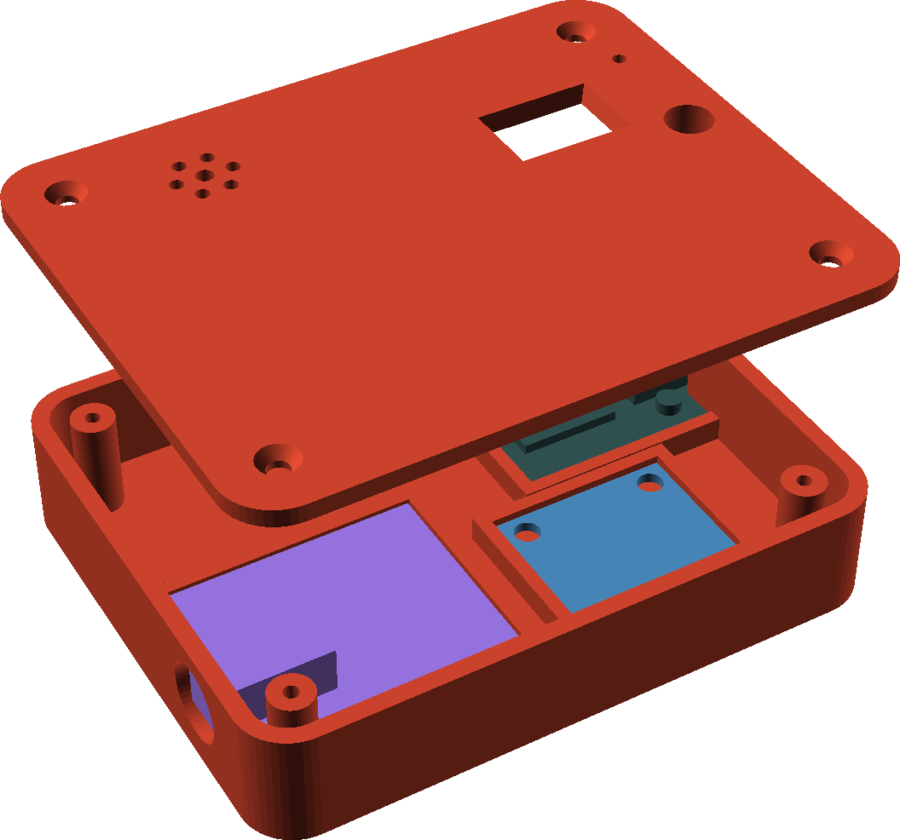
Screens are rendered from the firmware's own drawing code on a computer (tools/uisim/tour.sh makes the video). The case is a render; it has not been printed yet.
Get one
Prebuilt
Assembled, flashed and tested, built by hand in Haifa. Write and ask about price and shipping.
Email WhatsAppBuild it with me
The ESP32 workshop: 7 meetings at MEZO, Haifa, kit included. You leave with a board that runs Samplooler and TWOFOLD.
2,200 ₪ The workshopBuild from scratch
Order the parts yourself, print the case, flash from this page. Everything you need is in the repository.
Build guideOne board, two instruments: the S3 version uses the same board and wiring as TWOFOLD, a small USB sound card with an EQ, effects and a screen. Flash one, flash the other.
Flash from the browser
- Use Chrome or Edge on a computer. Phones cannot do this.
- S3: hold the BOOT button on the board while you plug it in, then let go. The running firmware uses USB for MIDI and audio, so the browser only finds the board this way.
C3: just plug it in. - Press the button on the right and pick the port. The page works out which chip it is.
- When it says done, unplug and plug in again. On the S3 it may say the device was lost; that is normal.
Flashing erases the sample slots. The images are also on the releases page, one file per chip, written at offset 0x0.
Build one
Four small modules wired to the board: a microphone, an audio output, a tilt sensor, and on the S3 a screen, an encoder and a record button. Wired point to point it takes an evening if you have soldered before.
For the S3 there are also two circuit boards: a two-board stack, and a one-board Mini without the joystick. They pass their electrical and design-rule checks but have not been made yet; the files and what to check before ordering are in hardware/.
| Part | What it does | Rough price |
|---|---|---|
| ESP32-S3 or C3 SuperMini | runs everything | $2 to $7 |
| INMP441 | microphone | $1.50 to $3 |
| PCM5102A module | line out on a 3.5 mm jack | $2.50 to $5 |
| MPU6050 (GY-521) | tilt | $1 to $2.50 |
| S3 only | 0.96" OLED, EC11 encoder, record button | about $4 |
The output is line level: use headphones through a small amp, powered speakers, or a mixer. The full parts list, wiring, case printing and a first-power-on check are in the build guide.
With a computer (S3)
Plugged into a computer, the S3 shows up as a MIDI port and a sound card. The loop goes straight into a DAW track, and anything the DAW plays can be recorded into the box. Every setting can be changed over MIDI. The plugin (VST3 and standalone) shows the tilt, the speed and the log, and has buttons for record, save and load.
Open source
| Part | Licence |
|---|---|
| firmware, tools | GPL-3.0 |
| plugin | AGPL-3.0 (JUCE) |
| case, circuit boards, docs, images | CC BY-SA 4.0 |
Fork it, change it, sell your own. Keep it open and say where it came from. Bugs, questions and builds go in GitHub issues.